Best Microphones for Podcasting and Content Creation in 2026
Best Microphones for Podcasting and Content Creation in 2026
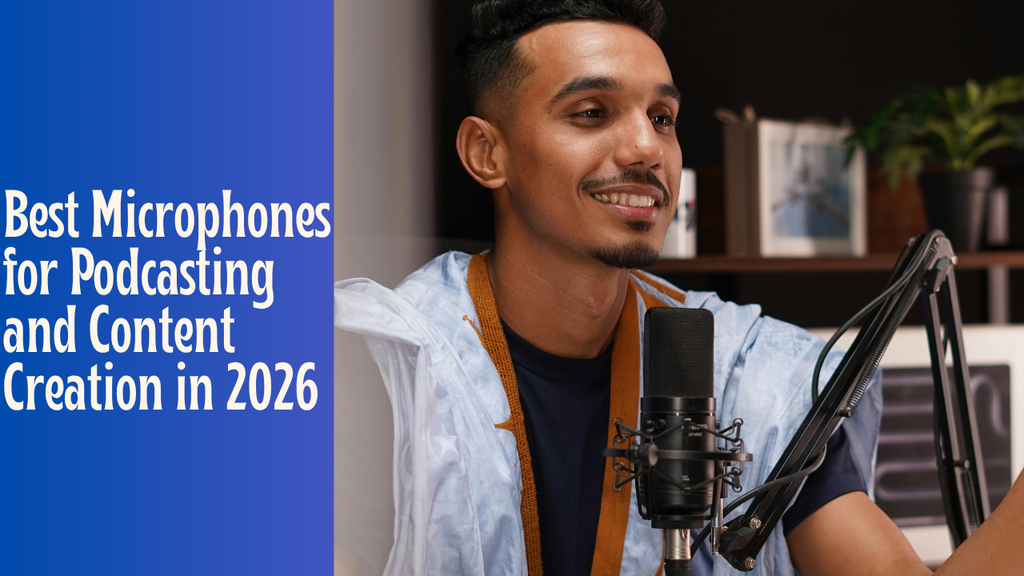
Your microphone matters more than almost any other piece of gear in your setup — it’s the difference between sounding like a professional and sounding like you recorded in a bathroom at 2 AM. The good news: 2026’s lineup of podcasting mics makes it easier than ever to get broadcast-quality sound, whether you’re just starting out or upgrading a treated studio. Below are the best picks across USB, XLR, and hybrid options, organized by what kind of creator you are.
As an Amazon Associate, I earn from qualifying purchases.
Best Overall (Hybrid USB/XLR)
1. Shure MV7+
The mic most reviewers point to as the best all-around choice in 2026, and for good reason — it combines the plug-and-play simplicity of USB with the option to upgrade to XLR later, so you’re not locked into your first setup. It plugs in and works immediately, making it a strong pick whether you’re recording your first episode or running a more advanced studio.
Best for: Most podcasters — beginners through professionals Connectivity: USB-C and XLR | Type: Dynamic
Best Budget Pick
2. RØDE PodMic USB
The mic most engineers recommend to new podcasters first. It’s a dynamic capsule with both USB-C and XLR outputs, so you can start simple on USB and move to a full XLR interface later without buying a second microphone. At around $99, it’s a genuine entry point into real podcast-quality audio.
Best for: First-time podcasters, budget-conscious creators Connectivity: USB-C and XLR | Type: Dynamic
Best for Noisy Rooms
3. Shure SM7B
Widely considered the gold standard for podcasters, radio hosts, and voice-over artists — you’ll see this mic in more professional studio photos than almost any other. As a dynamic microphone, it’s less sensitive to background noise than condenser mics, making it ideal if you don’t have a fully treated recording room. A built-in pop filter also reduces breathiness and mechanical noise for a smooth, professional sound.
Best for: Untreated rooms, professional studio sound Connectivity: XLR (requires audio interface with +48V phantom power) | Type: Dynamic
4. Electro-Voice RE20
Another dynamic XLR mic built specifically to reject room noise, commonly recommended alongside the SM7B for noisy home offices. If you don’t have acoustic treatment and can’t control your recording environment, this is one of the more reliable options for keeping unwanted sound out of your recordings.
Best for: Home offices without acoustic treatment Connectivity: XLR | Type: Dynamic
Best for Detail & Studio Sound
5. Audio-Technica AT2035
A large-diaphragm condenser mic that captures a rich, full sound across a wide range of frequencies, making it a versatile choice for different voice types. The cardioid polar pattern helps isolate your voice from background noise, though — as a condenser mic — it performs best in a quieter, more treated space rather than a noisy room.
Best for: Treated home studios, detailed vocal capture Connectivity: XLR | Type: Condenser
Best All-in-One USB Mic
6. Blue Yeti X
A longtime favorite that remains one of the most popular USB mics for streamers and content creators. Four-capsule technology gives it four selectable pickup patterns (cardioid, omnidirectional, bidirectional, and stereo), so one mic can adapt to solo recording, interviews, or ambient room capture without needing extra gear.
Best for: Streamers, multi-format content creators Connectivity: USB | Type: Condenser
Best Compact USB Option
7. RØDE NT-USB Mini
A smaller, more affordable alternative to the Yeti X that still delivers strong plug-and-play sound quality. If desk space is tight or you want something less visually bulky on camera, this compact mic gives up some versatility for a smaller footprint.
Best for: Small desk setups, on-camera creators Connectivity: USB | Type: Condenser
Best Wireless / Flexible Option
8. Maono PD200W
Built specifically for content creators who move around — streamers and podcasters alike. The dynamic cardioid capsule rejects background noise well, especially with its more aggressive noise-canceling mode engaged, and the mic offers USB-C, XLR, and wireless connectivity in one unit. At around $130 (often discounted below $100), it’s an unusually flexible pick for the price.
Best for: Creators who want wireless freedom without sacrificing connectivity options Connectivity: USB-C, XLR, and wireless | Type: Dynamic
Best Slim / On-Camera Design
9. Blue Ember
A side-address condenser mic designed so you speak directly into the front rather than the top — paired with a slim form factor, this makes it a strong choice for creators working in tight spaces or on camera, where a bulky mic can be distracting on screen. Despite its slim profile, it has a substantial 380-gram build that feels premium in hand.
Best for: On-camera content, tight desk setups Connectivity: XLR (requires interface with +48V phantom power) | Type: Condenser
Best for Serious Home Studios
10. Shure SM7dB
A step up from the standard SM7B, this version adds a built-in preamp to boost gain without needing an external cloudlifter or high-gain interface — useful since dynamic mics like the SM7 family typically need significant clean gain to sound their best. A go-to recommendation for noisy home offices that still want professional, broadcast-grade sound.
Best for: Serious home studios wanting broadcast-quality sound Connectivity: XLR | Type: Dynamic
How to Choose the Right Podcast Microphone
- USB vs. XLR: USB mics plug directly into your computer and are the easiest way to start — ideal for solo podcasters and remote recording through platforms like Zoom, Riverside, or Squadcast. XLR mics require an audio interface but offer more control over gain and sound quality, and are the standard for professional setups.
- Dynamic vs. condenser: Dynamic mics (SM7B, RE20, PodMic) are less sensitive and handle background noise better — ideal for untreated rooms. Condenser mics (AT2035, Yeti X, Ember) capture more detail and nuance but pick up more room noise, so they perform best in quieter, treated spaces.
- Match the mic to your room, not your dream setup: A high-end condenser mic in an untreated, echoey room will often sound worse than a budget dynamic mic in the same space. Be honest about your actual recording environment before you buy.
- Plan for growth: Hybrid mics like the Shure MV7+ and RØDE PodMic USB let you start on simple USB and later upgrade to a full XLR interface without replacing the microphone itself.
- Clean audio matters beyond your listeners: If you use AI transcription or editing tools (Whisper, Descript, Adobe Podcast AI), clean, low-noise audio significantly improves accuracy — a noisy signal forces these tools to guess.
Disclosure: This post contains Amazon affiliate links. As an Amazon Associate, I earn from qualifying purchases at no additional cost to you.