5 Ways Brainwave Audio May Help You Improve Focus, Productivity & Relaxation
5 Ways Brainwave Audio May Help You Improve Focus, Productivity & Relaxation
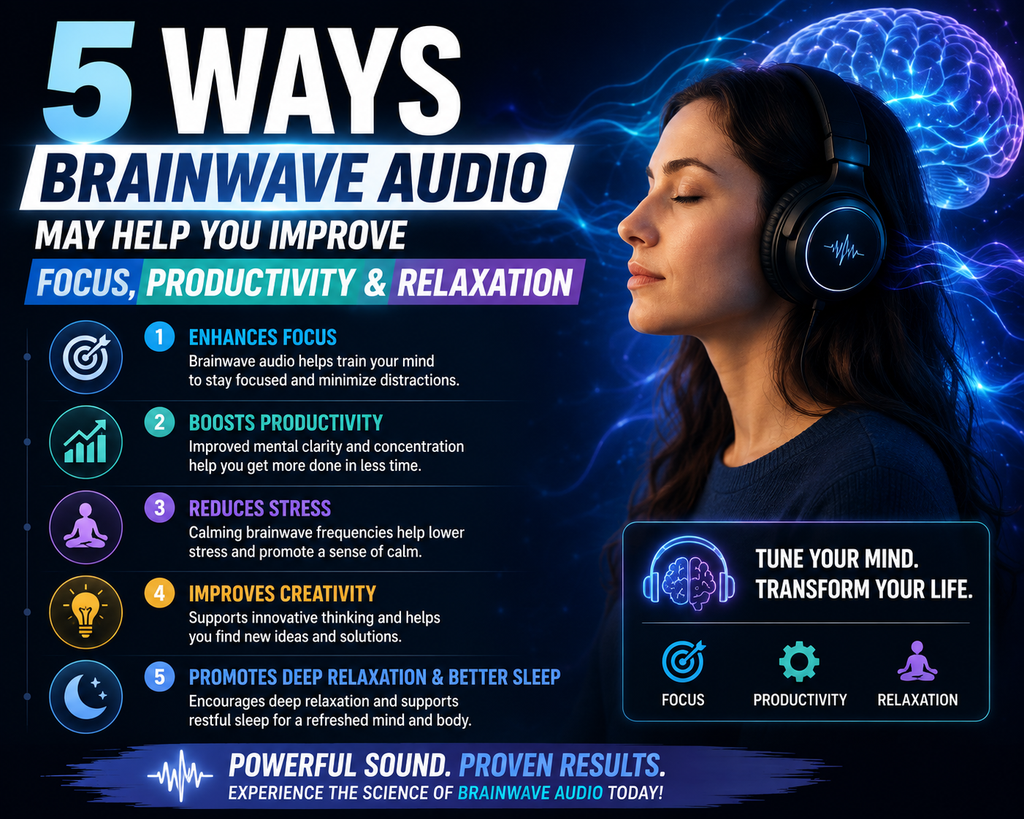
Brainwave audio — often called brainwave entrainment, binaural beats, or audio-visual entrainment (AVE) — has moved from niche biohacking circles into the mainstream productivity and wellness space. The core idea: rhythmic sound (and sometimes light) can gently nudge your brain’s electrical activity toward patterns associated with specific mental states, like calm focus or deep relaxation.
It’s worth saying upfront that this is a “may help,” not a “will fix,” category. Research on brainwave entrainment is real but still developing — some effects are well-supported, others are more modest than the marketing around them suggests. Here’s an honest look at five ways it may genuinely help, based on what the evidence actually shows.
How Brainwave Audio Actually Works
Most products in this space use one of two mechanisms:
- Binaural beats: Two slightly different tones are played separately in each ear. Your brain perceives a third “phantom” beat equal to the difference between the two frequencies, and some research suggests neural activity can shift toward matching that beat frequency.
- Isochronic tones or audio-visual entrainment (AVE): Single tones (or pulses of light) are turned on and off at a steady rate, aiming for a similar entrainment effect through rhythmic pulsing rather than the two-tone binaural trick.
Different target frequencies are associated with different mental states:
- Delta (below 4 Hz): Deep, dreamless sleep
- Theta (4–8 Hz): Deep relaxation, meditation, creative insight
- Alpha (8–13 Hz): Calm alertness — relaxed but not drowsy
- Beta (13–30 Hz): Active concentration and analytical thinking
- Gamma (30+ Hz): High-level processing and momentary insight
1. Supporting Sleep Quality
Delta-wave entrainment has some of the more encouraging evidence behind it. Small studies have found that a single session of delta-wave brainwave entrainment before sleep was associated with measurable improvements in sleep score, total sleep time, and deep sleep, along with fewer nighttime awakenings. If you struggle to wind down at night, a delta or theta-focused track played as part of a bedtime routine is one of the more evidence-backed uses of this technology.
2. Easing Everyday Stress and Anxiety
Alpha and theta entrainment are commonly used for stress relief, and there’s a reasonable body of research behind the approach: multisensory (audio-visual) entrainment sessions have been linked to reductions in negative mood and anxiety symptoms in controlled studies. The proposed mechanism is straightforward — rhythmic sensory input nudges the brain toward the calmer, more regulated states associated with alpha and theta activity, similar to what happens during meditation.
3. Supporting Sustained Focus and Concentration
For work or study sessions, alpha and low-beta frequencies are the ones most associated with “calm but alert” concentration. Alpha waves (roughly 8–13 Hz) support relaxed alertness, while low-beta activity (around 13–20 Hz) is linked to focused, analytical thinking. Some entrainment platforms build music specifically engineered around these frequencies rather than simply layering a tone under a song, on the theory that ordinary “focus playlists” weren’t designed with neural entrainment in mind and tend to produce inconsistent results.
It’s worth being realistic here: entrainment likely helps focus indirectly, by reducing stress and creating a consistent auditory routine your brain associates with “work mode,” as much as it does through any direct frequency effect.
4. Aiding Creative Thinking and Idea Generation
Theta states have long been associated with the loose, associative thinking that shows up during daydreaming, meditation, and the hypnagogic state just before sleep — conditions where creative insights often occur. Some practitioners use theta-targeted audio specifically during brainstorming sessions or when they’re stuck on a problem and want to approach it from a different angle. The evidence here is more anecdotal than clinical, but the underlying association between theta activity and creative cognition is well-documented in neuroscience more broadly.
5. Managing Workplace Stress in Short Bursts
Because sessions are typically short (often 7–20 minutes) and require no special skill, brainwave audio has found a niche as a quick reset tool during the workday — something to use between meetings or during a midafternoon energy dip. Alpha-frequency audio in particular is positioned as a middle ground: calming enough to reduce anxiety, without the drowsiness that deeper theta or delta sessions can bring, making it more compatible with getting back to work afterward.
What the Evidence Doesn’t Support
To keep this balanced: current research does not support claims that brainwave audio can permanently boost intelligence, dramatically enhance memory, or replace treatment for diagnosed anxiety, ADHD, or sleep disorders. Reviews of the research area consistently describe effects as mild to moderate and inconsistent across individuals, with a role for relaxation and placebo response alongside any direct entrainment effect. If a product’s marketing promises dramatic, guaranteed cognitive transformation, treat that as oversold regardless of how legitimate the underlying science is.
Getting Started
If you want to try brainwave audio, a few practical notes:
- Headphones are required for binaural beats specifically — the two-tone trick doesn’t work through speakers, since both ears need to receive a different frequency.
- Consistency matters more than any single session. Most of the research showing meaningful effects involves regular use over time, not a one-off listen.
- Match the frequency to your goal: delta/theta for sleep and relaxation, alpha for calm focus, low-beta for concentrated work.
- Free options exist (many are available on YouTube and dedicated apps), so there’s no need to assume a paid program is required to test whether this approach works for you before investing in a premium platform.
Bottom Line
Brainwave audio sits in a genuinely interesting, partially-validated corner of neuroscience — not a proven cure-all, but not pseudoscience either. Used with realistic expectations (a relaxation and focus aid, not a guaranteed intelligence upgrade), it’s a low-risk, low-cost habit worth experimenting with, especially for sleep support, stress reduction, and short focus resets during the day.
This article is for general informational purposes and is not medical advice. If you have a diagnosed sleep, anxiety, or attention condition, consult a qualified healthcare professional before relying on any entrainment product as a treatment.