The Genius Wave Review 2026 Features, Benefits, Pros, Cons & What to Know Before Buying
The Genius Wave Review 2026 Features, Benefits, Pros, Cons & What to Know Before Buying
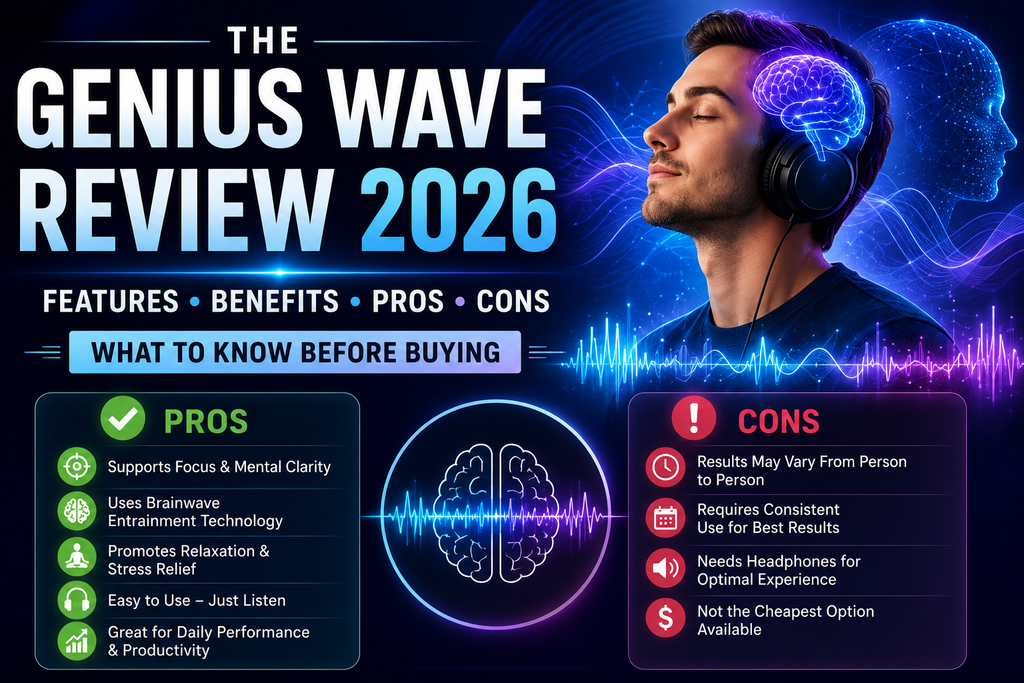
The Genius Wave is a digital audio program marketed as a way to “activate” theta brainwaves and unlock sharper focus, creativity, and cognitive performance in just seven minutes a day. It’s generated a large volume of online coverage — much of it from press-release style “reviews” that read more like sales copy than independent evaluation. Here’s a straightforward look at what the product claims, what’s actually backed by evidence, and what to check before you buy.
A note on this review: I haven’t personally purchased or used The Genius Wave, and independent, peer-reviewed research specific to this product doesn’t appear to exist publicly. This review is based on how the product is marketed and on general, well-established science around brainwave entrainment — not a firsthand test of results.
What Is The Genius Wave?
The Genius Wave is sold as a short daily audio track (commonly described as around seven minutes) paired with an accompanying guide or e-book. It’s promoted under the science of “brainwave entrainment” — the idea that specific audio frequencies can nudge your brain toward a particular wave pattern, in this case the theta state associated with deep relaxation, meditation, and creative thinking.
Marketing material attributes the program to a neuroscientist (most commonly named as “Dr. James Rivers,” sometimes described as MIT-affiliated), though I could not independently verify this individual’s credentials or academic affiliation through any source outside the product’s own promotional pages. That’s worth flagging clearly: an unverifiable expert credential is a common pattern in this type of wellness marketing, and it shouldn’t be taken at face value.
The Science Behind the Claims — What’s Real and What’s Oversold
What’s genuinely established: Brainwave entrainment itself is a real, studied phenomenon. Techniques like binaural beats and rhythmic audio can influence brainwave activity to some degree, and theta states are legitimately associated with relaxation and certain creative or meditative mental states. This part isn’t fabricated.
Where the marketing overreaches: Claims that a short daily audio track can “unlock genius,” rewire the brain for higher intelligence, or replicate techniques used by “Nobel winners and CEOs” go well beyond what the underlying science supports. Brainwave entrainment research generally shows modest, short-term relaxation or focus effects — not dramatic cognitive upgrades. Reputable coverage of the product itself has noted that specific frequency details, methodology, and research citations aren’t fully disclosed, which makes independent verification difficult. Treat “unlock your inner genius” language as marketing framing, not a scientific claim you should expect to be literally true.
Features (As Marketed)
- A daily audio track, typically around 7 minutes, designed for theta-state entrainment
- An accompanying digital guide/book explaining the theory behind the program
- Playable on phone, tablet, or computer — no special equipment required (though some listings also reference a headset)
- One-time purchase pricing, positioned as cheaper than ongoing coaching or subscription apps
- A stated money-back guarantee window (commonly cited around 60 days)
Pros
- Low time commitment. A 7-minute daily listen is realistic for most people to stick with, unlike longer meditation or coaching programs.
- Low risk of physical harm. Unlike supplements or nootropic pills, an audio track carries no ingestion-related health risk.
- Grounded in a real (if oversold) mechanism. Brainwave entrainment isn’t invented pseudoscience — it’s a real area of study, even if this product’s specific claims stretch beyond it.
- Accessible. No special hardware required for the core audio component in most versions.
Cons
- Unverifiable expert credentials. The “neuroscientist” behind the program isn’t independently confirmed through academic or professional sources outside the sales material.
- Inflated claims relative to the evidence. “Unlock genius” and comparisons to Nobel laureates’ mental states are marketing exaggerations not supported by rigorous, product-specific research.
- Thin transparency on methodology. Reviewers have noted a lack of disclosed frequency specifics or research citations, which makes it hard to evaluate the audio’s actual design.
- Billing complaints. Some customer reviews report unexpected recurring charges (in the range of a few dollars monthly) after what was marketed as a one-time purchase — worth confirming directly with the seller before buying, and worth checking your statement after purchase.
- Price relative to free alternatives. Free binaural beat and theta-wave audio tracks are widely available; you’re paying primarily for packaging, the accompanying guide, and marketing, not a proprietary technology.
What to Check Before Buying
- Confirm the billing structure directly — ask (in writing, if possible) whether the purchase is genuinely one-time, given existing complaints about recurring charges.
- Read the refund policy in full, including any conditions attached to the money-back guarantee, before purchasing.
- Set realistic expectations. Treat this as a relaxation/focus aid in the same category as meditation apps or ambient audio — not a scientifically validated intelligence booster.
- Look for reviews outside the product’s own affiliate network. Much of what ranks for “Genius Wave review” is press-release style content or affiliate marketing rather than independent testing.
- Don’t substitute it for professional care. If you’re dealing with a genuine cognitive, attention, or mental health concern, this kind of product isn’t a substitute for a doctor, therapist, or specialist.
The Bottom Line
The Genius Wave is built on a real scientific concept (brainwave entrainment) but markets itself with claims — dramatic cognitive transformation, comparisons to elite performers’ brain states — that go beyond what the evidence for this type of audio actually supports. It’s low-risk compared to ingestible supplements, and a 7-minute relaxation habit isn’t inherently harmful for most people. But it’s reasonable to treat this as a mood/focus aid rather than a scientifically proven intelligence upgrade, to verify the billing terms carefully given existing complaints, and to weigh the price against the many free brainwave-audio resources already available.
Disclosure: This review is based on publicly available marketing material and third-party coverage, not personal use of the product. It is not medical advice. If you have concerns about cognitive function, attention, or mental health, consult a qualified healthcare professional.